Reimagining Cement for a Sustainable Future

Revolutionary Cement Replacement Technology

Cement production is one of the largest contributors to global CO2 emissions, accounting for over 7% of worldwide emissions. Still, as the world races to decarbonize, demand for concrete continues to soar. PozGlass 100G (PozGlass) addresses this dual challenge head-on: reducing the environmental footprint of cement while creating a second life for post-consumer glass.

As climate-related events like wildfires and hurricanes increase in frequency and intensity, the demand for durable, resilient building materials continues to grow. Concrete structures offer greater protection against these forces compared to wooden homes, which are often more vulnerable to fire and storm damage. In regions like California, where wooden homes are becoming uninsurable, concrete is emerging as a critical solution for rebuilding and future-proofing communities.    

This patented, scalable technology isn’t just about reducing emissions – it’s about reshaping the cement industry with integrity, innovation, and sustainability at its core.

Why Our SCMs Matter

Global emissions

7%

Share of worldwide CO2 emissions traced to cement production.

Source: Global Carbon Project

Industrial CO2

26%

Share of industrial emissions from cement — and rising as fly ash supply shrinks.

Source: IEA, 2024

Addressable market

$19B

Combined US + Canada concrete market by 2029, with industry targeting 50% blended replacement.

Source: Research and Markets, 2025

POZGLASS™ SCM

PozGlass is a low-carbon supplementary cementitious material (SCM) that can be seamlessly integrated into existing cement production processes.

Transforming glass:

Our patent-pending process removes sodium from soda-lime glass, enhancing its performance as an SCM.

Permanent carbon sequestration:
The removed sodium reacts with CO2 to form sodium carbonate, which we convert to calcium carbonate (limestone) locking away carbon permanently.

Circular Economy Benefits:

Calcium carbonate can then be repurposed into several  valuable products, while PozGlass becomes a high-performance cement replacement.

GLADIATOR SCM

Inspired by the enduring strength of Roman concrete, engineered for the demands of modern construction.

The name Gladiator SCM pays tribute to Roman concrete, a material celebrated for its extraordinary strength and longevity. A testament to that legacy is the Pantheon in Rome, whose nearly 2,000-year-old unreinforced concrete dome remains the largest of its kind and still stands in remarkable condition today.

Developed entirely in-house by the Progressive Planet team, Gladiator SCM is a patent-pending supplementary cementing material that builds on the proven performance of PozGlass while incorporating additional abundant materials to deliver a more versatile and scalable solution. A provisional patent has been filed in the United States, and trademark applications are underway in both Canada and the USA.

PLANET LCD

A scalable, lower-carbon cement replacement — built from some of the most abundant materials on earth.

As the construction industry works to reduce its carbon footprint, global cement producers have embraced Limestone Calcined Clay Cement (LC3), a class of cement that can replace up to 50% of Portland cement using materials like metakaolin, limestone, and gypsum. Progressive Planet believes it is the first company to take this innovation a step further.

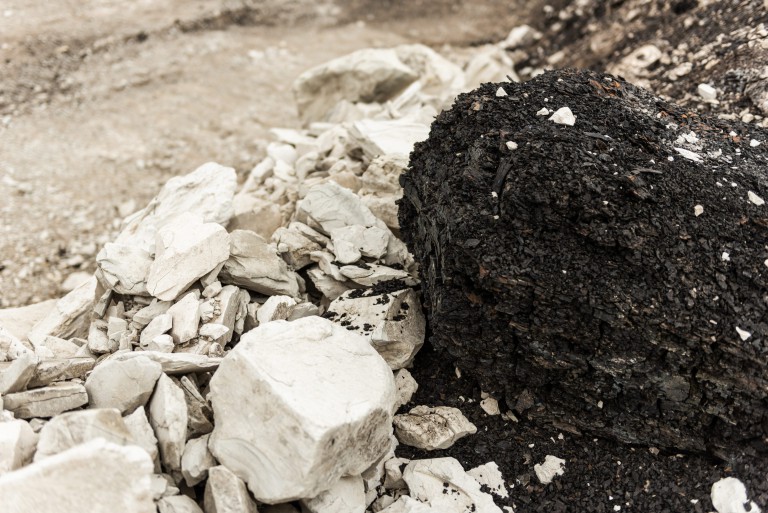
Planet LCD Cement is a patent-pending Limestone Calcined Diatomite (LCD) cement that replaces metakaolin with diatomaceous earth, a widely available, low-cost material whose waste powders sell for a fraction of the price of metakaolin.

In mortar cube testing, Planet LCD Cement has demonstrated strong compressive strength at 20%, 35%, and 50% Portland cement replacement on a weight-for-weight basis, with all results passing ASTM C618.

C-Quester Centre of Sustainability

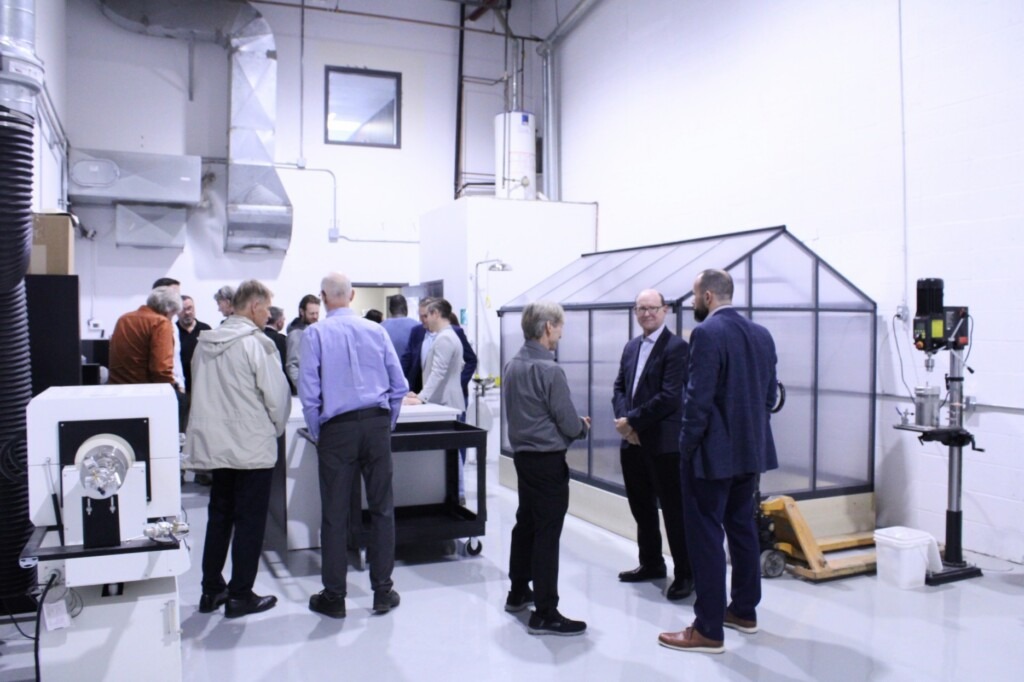
Opened in March 2026, our Calgary facility is the home of advanced cement research and third-party testing services. The lab is focused on developing new formulations of Planet LCD Cement using waste diatomaceous earth sourced from industrial mineral processors, as well as the development of a proprietary plasticizer specifically designed for use with Planet LCD Cement. Research into new versions of Gladiator SCM is also conducted here.


In addition to internal research, the Calgary lab offers contractual testing services to third-party clients — part of a long-term strategy to establish testing as a dedicated revenue stream within the Progressive Planet group of companies.

Driving Innovation in Low-Carbon Cement

Our Calgary team is dedicated to accelerating the transition to more sustainable construction materials. By combining waste-derived inputs with advanced formulation techniques, we are creating scalable solutions that reduce environmental impact without compromising performance.
Material Processing & Preparation

In addition to testing, the facility is equipped for advanced material preparation and thermal processing:

Drying & grinding (up to 2 kg samples) Homogenization and sample splitting Sieve analysis Thermal activation using rotary kiln (up to 1150°C)
Integrated Innovation Across Facilities

While Calgary leads advanced cement R&D and external testing, our Kamloops lab remains focused on quality control and the continued development of PozGlass SCM as it moves toward commercialization. Ongoing work in Kamloops also includes the recovery and utilization of glass nanoparticles, unlocking additional value and performance benefits from our production processes.

Cement Testing Services

Test Standard Description
ASTM C150 Portland Cement Testing
ASTM C114 Chemical Analysis (with LOI)
ASTM C185 Air Content
ASTM C204 Fineness
ASTM C191 Time of Setting (Vicat)
ASTM C109/109M Compressive Strength
ASTM C452 Sulphate Expansion
ASTM C1038/1038M Water Expansion
ASTM C1702 Heat of Hydration
ASTM C311 Specific Gravity
ASTM C430 Particle Size Analysis
ASTM C1437 Mortar Flow
Material Preparation & Processing
Powder Preparation General sample preparation
Drying & Grinding Up to 2 kg samples
Homogenization & Splitting Sieve-based sample processing
Thermal Activation Rotary kiln up to 1150°C

Connect with our Calgary Lab:

Name
E-mail
Phone Number
Company
Message